Customer relationship systems hold very delicate business information such as customer profiles, financial transactions, contracts, and internal messages. As businesses depend on digital resources increasingly, this information is important to protect.
Conventional security systems relied on the trust of the user as soon as they were in the network. Nevertheless, it is no longer efficient with mobile devices, remote work, and numerous integrations.
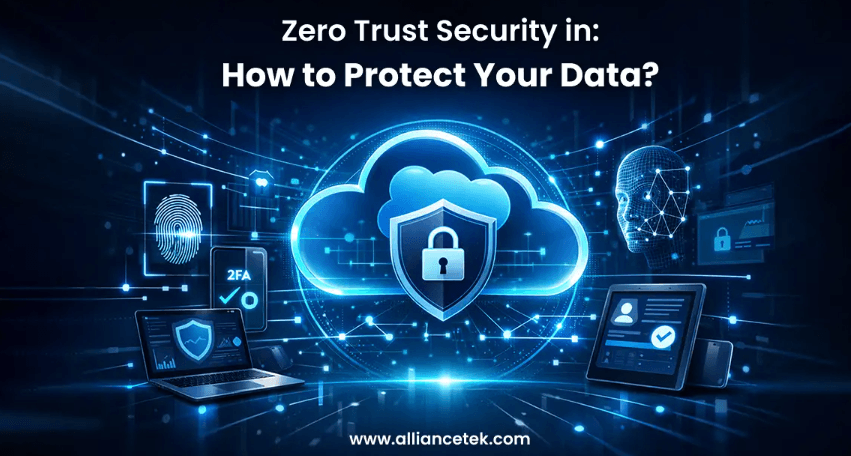
In response to these risks, organizations are now implementing Zero Trust Architecture in CRM Systems where all users, devices, and applications are authenticated prior to accessing Salesforce data. This method is now a requirement for CRM security of CRM in 2026 and beyond.
What Is Zero Trust Security?
Zero Trust is based on the simple principle of never trusting automatically and always verifying.
Rather than believing that users within the network are secure, all access requests need to be verified and tracked. Companies that use Salesforce CRM development services usually apply the principles of Zero Trust in the implementation of the system to ensure that the business information is secured from the very beginning.
The major aspects of Zero Trust are:
- Perpetual identity checking.
- Least-privilege access
- Strong authentication
- Segmented data access
- Real-time monitoring
These controls make sure that those accessing sensitive information are always verified.
Why Zero Trust Is Important for Salesforce?
CRM systems are also good business intelligence and thus are a desirable target of cyber attacks.
Security risks are heightened by a number of factors:
- Hybrid work environments
- Mobile device access
- Third-party integrations
- API connections
- Insider threat
Companies that hire a Salesforce development company tend to create custom workflows and integrations. Although these features enhance operations, they also provide new entrance points that are required to be guarded.
Zero Trust allows the mitigation of these risks by authenticating all requests to the CRM system.
Identity and Access Management
Zero Trust security is based on identity verification. Using Salesforce data should be controlled by businesses to only authorized users.
An effective Salesforce identity and access management practice consists of a few practices.
Multi-Factor Authentication (MFA) requires users to verify identity through multiple methods such as authentication apps, security tokens, or biometrics.
Single Sign-On (SSO) centralizes authentication across systems. Organizations implementing Salesforce CRM development solutions often use SSO to simplify and secure user access.
Role-Based access control ensures employees only access the information required for their role. The least-privilege principle further limits unnecessary permissions.
Protecting Sensitive Data with Encryption
Data protection is another essential layer of security. Encryption ensures sensitive information remains unreadable without proper authorization.
Businesses should follow strong Salesforce data security best practices, including:
- Encrypting stored data
- Encrypting data during transmission
- Protecting sensitive fields
- Managing encryption keys securely
Many companies integrate encryption tools while building platforms through Salesforce application development services, ensuring security is built directly into the system.
Continuous Monitoring and Threat Detection
Zero Trust requires continuous monitoring of system activity. Security teams must track user behaviour to identify unusual patterns.
Important monitoring practices include:
- Tracking login locations
- Monitoring failed login attempts
- Reviewing data export activity
- Tracking API usage
Organizations that hire Salesforce developers often build monitoring systems that generate alerts when suspicious activity occurs. Real-time detection allows teams to respond quickly and prevent security incidents.
Securing Integrations and APIs
Modern Salesforce environments rely on integrations with marketing platforms, payment systems, and analytics tools.
Organizations offering Salesforce customization services must ensure these integrations follow strict security practices.
Best practices include:
- Restricting API access through IP limits
- Auditing connected apps regularly
- Removing unused credentials
- Using secure authentication methods
Every integration should be verified to maintain system security.
Device Security and Remote Access
Employees now access Salesforce from laptops, tablets, and smartphones. Each device introduces potential risks.
Organizations should implement device verification policies before granting access.
Security measures may include mobile device management tools, endpoint security systems, and conditional access rules. Companies that hire dedicated Salesforce developer teams often include device verification during system setup to ensure only trusted devices can connect.
Organizations that hire remote Salesforce developer teams must also ensure that remote environments follow strict security guidelines.
Preventing Data Loss
Sensitive information can be revealed by the misuse of internal data as well. Companies need to regulate the access and sharing of data.
An effective Salesforce data protection and compliance plan also involves limiting large data exports, tracking report downloads, and sharing permissions.
Corporations that offer Salesforce consulting services tend to assist businesses in developing governance policies that limit the chances of data leakage.
See also: Risks and Benefits of FinTech
Building a Security-Focused Organization
Security cannot be ensured solely through technology. Employees should understand how they can help in the guarding of sensitive information.
Companies ought to offer training and periodic review of their security. In this case, outsourcing can help. Companies tend to hire the best Salesforce developers to create secure designs and uphold robust system configurations.
It is also essential to conduct regular security testing. Companies often hire top Salesforce developers or hire expert Salesforce developers to ensure that the vulnerabilities are uncovered before attackers strike.
The collaboration with seasoned workers enhances the general protection of the system. In other cases, some organizations hire Certified Salesforce Developers to make sure that the platform conforms to Salesforce security standards. Others hire Salesforce Consultants to develop long-term security solutions.
Secure Salesforce Implementation
Security must be incorporated in the early development of the system. Secure Salesforce Cloud Implementation is one of the aspects that businesses should consider when developing or extending their CRM environments.
Identity verification, encryption, monitoring and controlled access help organizations to develop a CRM system that safeguards customer data and business information.
Conclusion
The cyber threat is constantly developing, and CRM solutions are still worthy of attackers. The old-fashioned security models based on network boundaries are not sufficient any longer.
Zero Trust offers a more robust system where all users, systems and devices are checked prior to access.
In the case of Salesforce, it would entail enhanced identity management, encrypted data, constant surveillance, and secure integrations.
Companies implementing Zero Trust now will be more equipped to secure their CRM information in the future, in 2026 and after. Get in touch with Salesforce expats at AllianceTek for better CRM Data protection.